Home › Common Problems › Poor Attic Ventilation
Poor Attic Ventilation
in Nashville, TN
Most Nashville homeowners never think about attic ventilation. But it directly controls how long your shingles last and whether your roof boards rot. In summer, unventilated attics in Nashville regularly hit above 150°F. That heat cooks your shingles from underneath. Homes built before the 2006 International Residential Code adoption in Metro Nashville often lack the ridge venting that modern standards require. The longer you wait, the more shingle life you lose.
Nashville Roof Repair Pros helps Nashville, TN homeowners fix poor attic ventilation — call for a free inspection.
Quick Answer
Nashville attics with no ridge vents can hit above 150 degrees in summer, which slowly cooks your shingles from the inside out and rots the boards. Many homes built before 2006 in Metro Nashville never got the right vents installed. A roofer adds ridge vents or box vents so hot air can actually escape. Call if your upstairs rooms feel extremely hot or your energy bills keep climbing.
Telltale Signs
Warning Signs to Watch For
- Higher-than-expected energy bills, particularly during Nashville's long, hot summers
- Shingles aging, curling, or blistering prematurely compared to their rated lifespan
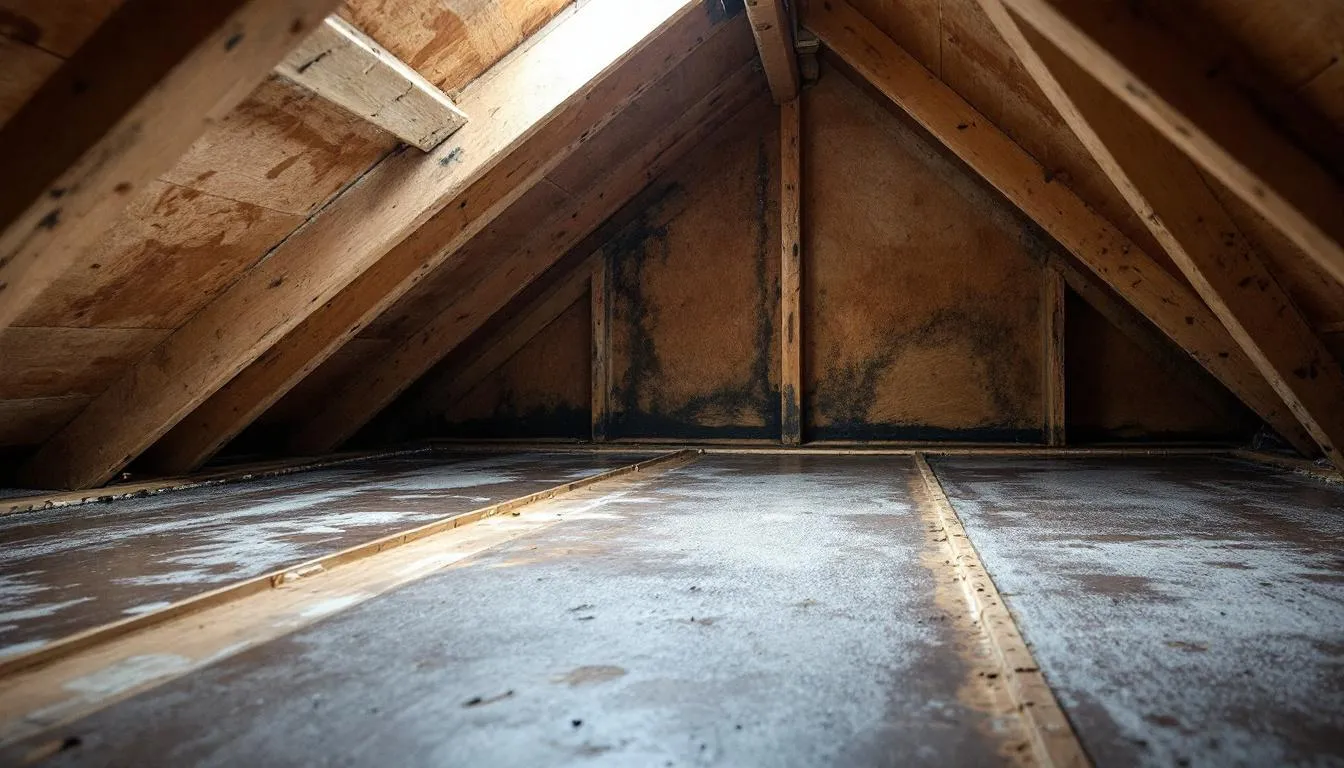
- Visible condensation, frost, or moisture staining on attic rafters and sheathing in winter
- Mold or mildew growth on attic insulation, sheathing, or framing members
- Rooms on the top floor noticeably hotter than lower floors in summer despite adequate HVAC
- Ice dam formation at eaves during winter freezes caused by uneven roof surface temperatures
Root Causes
What Causes Poor Attic Ventilation?
Blocked or Insufficient Soffit Vents
Good attic ventilation needs air to flow in at the soffits and out at the ridge. The soffit is the underside of your roof overhang where intake vents sit. In many Nashville homes, blown-in insulation has buried those soffit vents. Without cool air coming in at the bottom, heat and moisture get trapped in the attic.
The Fix
Soffit Vent Clearing and Baffle Installation
First, the soffit vents get cleared of any insulation blocking them. Then ventilation baffles go in between the rafters to keep a two-inch open airway above the insulation. That restores the airflow path the attic needs.
Absence of Ridge Ventilation
Many Nashville homes built through the 1980s used only gable-end vents for attic ventilation. Those vents only move air across a narrow strip of the attic. The sheathing is the wood panel layer nailed to your rafters under the shingles. The center ridge area gets almost no airflow, so heat builds up fast on summer afternoons. That heat bakes the shingles and softens the adhesive strips that keep them bonded together.
The Fix
Ridge Vent Installation
A slot gets cut along the full length of the ridge peak. Then a low-profile ridge vent gets installed so hot air can escape all the way across the top. Paired with soffit intake vents below, this keeps the attic at a safe temperature year-round.
Mixed Vent Types Causing Short-Circuit
A common mistake on Nashville re-roofing jobs is adding a powered fan to a roof that already has a ridge vent. The fan pulls air in through the ridge vent right away instead of drawing it up from the soffits. That short-circuits the whole system. In winter it can also pull warm air up from your living space through ceiling gaps. That raises your heating bill and dumps extra moisture into the attic.
The Fix
Ventilation System Redesign
The mismatched vent types get removed or sealed off. Then the attic ventilation gets redesigned around one consistent approach. Continuous ridge and soffit ventilation is the right call for Nashville's mixed-humid climate zone.
Self-Diagnosis
Which Cause Applies to You?
Check the signs you're observing to narrow down the likely root cause before your inspection.
| What You're Seeing | Blocked or Insufficient Soffit Vents | Absence of Ridge Ventilation | Mixed Vent Types Causing Short-Circuit |
|---|---|---|---|
| Insulation is packed against the eave area blocking visible soffit openings | |||
| Home has gable vents only with no ridge vent visible from the exterior | |||
| Powered attic fan and ridge vent are both present on the same roof | |||
| Attic is noticeably hotter than outside air temperature in late afternoon even with vents present | |||
| Frost or condensation forms on rafters in winter despite no roof leak | |||
| Shingles show blistering or premature cupping on upper roof field near ridge |
Free Quote
Get a free quote in Nashville
No obligation — tell us what's going on and we'll text you back shortly.
Other Problems
Services That Fix This
Poor Attic Ventilation Near You
Also Helpful