Home › Common Problems › Granule Loss and Shingle Deterioration
Granule Loss and Shingle Deterioration
in Nashville, TN
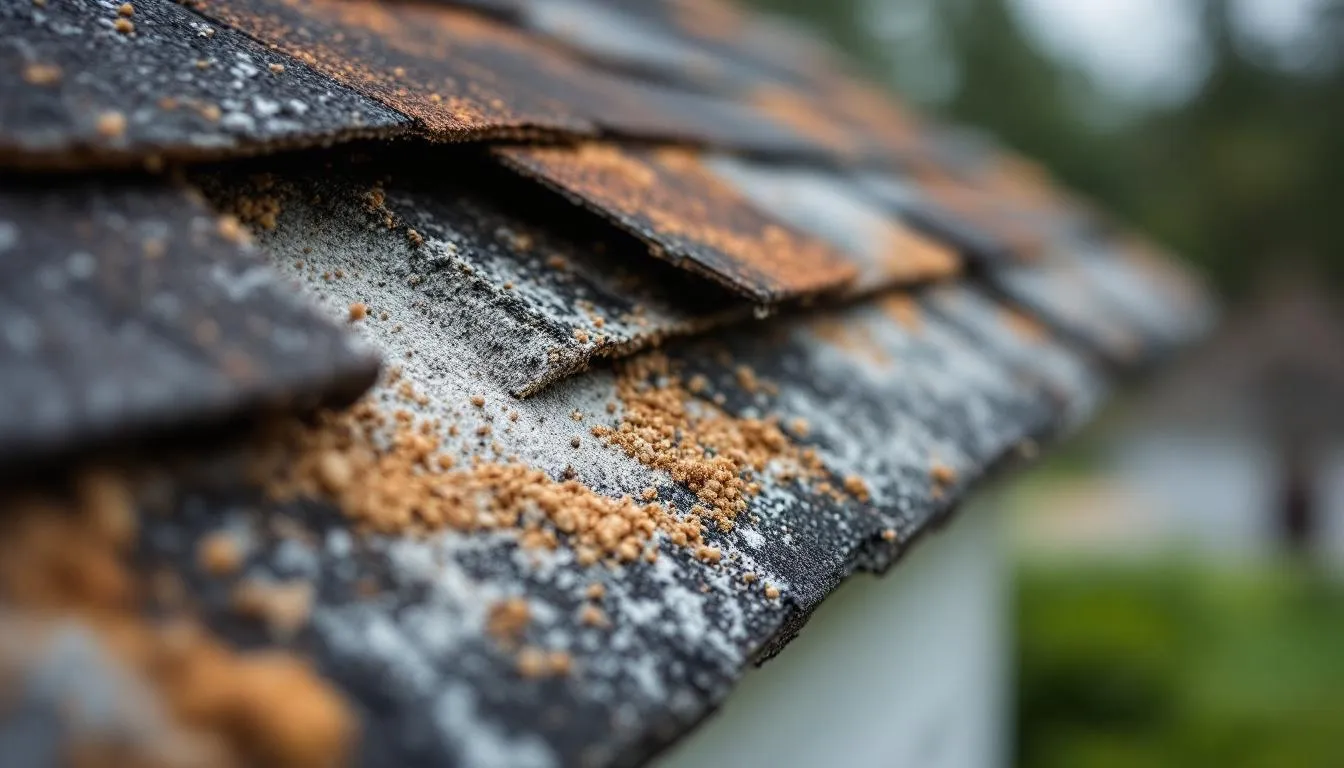
Asphalt shingles have a layer of mineral granules on top that block UV rays and shed water. Once those granules wear away, the asphalt mat underneath cracks fast. Nashville's summer UV index regularly hits 10 or above from June through August. That beats up south- and west-facing slopes the most. Nashville also has a serious hail history. Hail knocks granules loose on impact, and a roof that looks fine right after a storm can age much faster in the years that follow.
Nashville Roof Repair Pros helps Nashville, TN homeowners fix granule loss and shingle deterioration — call for a free inspection.
Quick Answer
Nashville's intense summer sun and hail storms knock the protective granules off shingles, leaving the asphalt underneath exposed and cracking fast. South- and west-facing slopes take the worst beating here. A roofer checks how much granule is left and tells you if patches or a full replacement makes sense. Call if you see a lot of gritty gray bits collecting in your gutters or downspouts.
Telltale Signs
Warning Signs to Watch For
- Large volumes of gray or brown granules accumulating in gutters or at downspout discharge points
- Shingle surfaces appearing visibly lighter, patchy, or bald in certain areas
- Dark or black streaks on shingles where the asphalt mat is exposed and oxidizing
- Shingles that feel brittle, crack easily when flexed, or have crumbling edges
- Increased granule deposits in gutters after any moderate storm even without hail
- Age-related cupping or curling of shingle edges on south- and west-facing slopes
Root Causes
What Causes Granule Loss and Shingle Deterioration?
UV and Thermal Degradation
Nashville's south-facing roof slopes bake in direct sun for most of the year. Surface temperatures can hit 160°F on a summer afternoon. That heat breaks down the bond holding granules to the asphalt mat. Over a typical 15- to 20-year shingle life in Nashville's climate, this damage builds up slowly. Granule loss speeds up sharply in the last few years before a roof fails. Once about 20 percent of the mat surface is bare, the roof does not have much life left.
The Fix
Partial or Full Roof Replacement
When granules wear away and the asphalt looks dried out, the roof needs to be replaced. New shingles go on over fresh underlayment, which is the water-blocking layer under the shingles. This resets the clock on your roof and holds up against Nashville's annual rainfall.
Hail Impact Damage
Middle Tennessee gets several significant hail events per year. Hailstones as small as three-quarters of an inch can knock granules loose and bruise the asphalt mat. The mat is the base layer inside each shingle. Bare spots age fast in the sun. The bruised areas let water seep in slowly. You may not see a leak inside your home for one to three years after the storm.
The Fix
Hail Damage Assessment and Replacement
A thorough inspection maps out where impact marks hit and how many there are. It also checks soft metals like gutters and flashing for dents. That information shows exactly how much of the roof needs new shingles.
Manufacturing Defect or Poor Shingle Grade
After big hail events in 2008 and 2020, Nashville roofers were slammed with work. High demand pushed some homeowners into accepting lower-grade shingles. Some of those products later had defect claims tied to early granule loss. These shingles can start falling apart within five to eight years. The granule loss usually spreads evenly across whole slopes rather than showing up only at impact points.
The Fix
Manufacturer Warranty Inspection and Replacement
The installer date, shingle product name, and the pattern of granule loss all get documented. Then the failing shingles come off and a proven architectural shingle goes on in their place.
Self-Diagnosis
Which Cause Applies to You?
Check the signs you're observing to narrow down the likely root cause before your inspection.
| What You're Seeing | UV and Thermal Degradation | Hail Impact Damage | Manufacturing Defect or Poor Shingle Grade |
|---|---|---|---|
| Granule loss is most severe on south- and west-facing slopes on an aging roof | |||
| Circular or oval bruise marks visible on shingle surface when viewed at a low angle in raking light | |||
| Granule loss is uniform across all slopes regardless of sun exposure on a relatively new roof | |||
| Shingles are curling upward at edges in addition to showing bare spots | |||
| Granule loss began or accelerated noticeably within a year of a documented hail event | |||
| Roof is less than 10 years old but showing granule loss levels typical of a 20-year-old roof |
Free Quote
Get a free quote in Nashville
No obligation — tell us what's going on and we'll text you back shortly.
Other Problems
Services That Fix This
Granule Loss and Shingle Deterioration Near You
Also Helpful