Home › Common Problems › Missing or Blown-Off Shingles
Missing or Blown-Off Shingles
in Nashville, TN
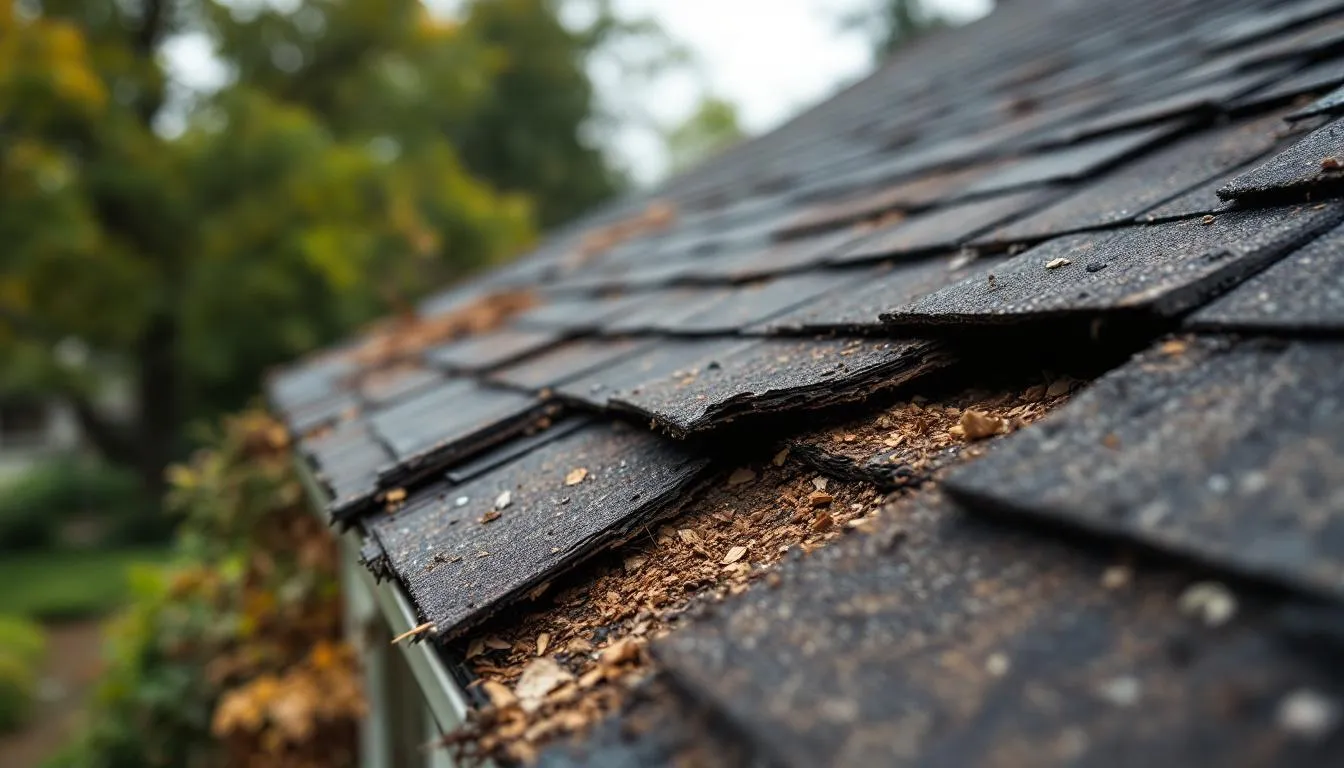
Nashville sits in a corridor prone to severe thunderstorms and straight-line winds. Gusts frequently exceed 60 mph during spring and fall storm seasons. Older three-tab roofs in neighborhoods like Bellevue, Antioch, and Madison built in the 1970s through 1990s are especially at risk. Leave a missing shingle alone long enough and water gets into the deck, rots the framing, and damages your ceilings.
Nashville Roof Repair Pros helps Nashville, TN homeowners fix missing or blown-off shingles — call for a free inspection.
Quick Answer
Nashville's strong spring and fall storms regularly rip shingles off older roofs in places like Bellevue and Antioch. A roofer removes the damaged area and nails down new shingles that match. The deck gets checked for soft or rotten wood before anything goes back on. Call for an inspection if you see bare dark patches on your roof after any storm.
Telltale Signs
Warning Signs to Watch For
- Visible bare or dark patches on the roof slope where shingles are absent
- Shingle pieces or granule debris scattered across your yard or gutters after a storm
- Water stains on interior ceilings or attic sheathing following heavy rain
- Curled, lifted, or partially detached shingles along ridge lines or edges
- Increased attic daylight visible through the roof deck
- Neighbors reporting finding shingle fragments blown into their yards
Root Causes
What Causes Missing or Blown-Off Shingles?
Severe Storm Wind Uplift
Nashville's spring supercells and summer thunderstorms create negative pressure on roof surfaces. This literally pulls shingles up off the nail strips that hold them down. Homes built before Metro Nashville updated its wind-resistance codes are especially vulnerable because the nail counts used back then are not enough to resist that kind of lift.
The Fix
Shingle Replacement with Wind-Rated Materials
We remove damaged shingles down to clean decking and install a fresh underlayment layer. Underlayment is the water-resistant barrier that sits between the decking and the shingles. New architectural shingles go on with six fasteners each, meeting current Metro Nashville building code requirements for wind resistance.
Failed Shingle Adhesive Strip
Asphalt shingles use a heat-activated sealant strip along the bottom edge to bond each row to the one below. In Nashville's climate, summer heat above 95 degrees followed by hard winter freezes dries out that sealant strip over time. Once it cracks and loses grip, shingles that look fine from the ground can still peel away in modest wind.
The Fix
Shingle Reseal and Spot Replacement
Loose shingles get roofing sealant pushed under each lifted edge to hold them down. Any shingle with a cracked or broken tab gets swapped out and sealed.
Improper Original Installation
Many Nashville homes were re-roofed quickly after big hail storms in 1998 and 2008. High-volume crews used nail guns set at the wrong pressure. A fastener driven too deep cuts through the shingle tab. One driven too shallow leaves the shingle loose. Either way, wind rips those shingles off much easier than it should.
The Fix
Full Roof Fastener Inspection and Renailing
Each bad shingle gets pulled up and re-nailed at the right depth through the nailing strip. Then it gets sealed back down so the whole roof holds together the way it should.
Self-Diagnosis
Which Cause Applies to You?
Check the signs you're observing to narrow down the likely root cause before your inspection.
| What You're Seeing | Severe Storm Wind Uplift | Failed Shingle Adhesive Strip | Improper Original Installation |
|---|---|---|---|
| Multiple shingles missing in a contiguous patch after a named storm event | |||
| Shingles found in yard are fully intact tabs, not crumbled or broken | |||
| Shingles release easily by hand with minimal force when tested during inspection | |||
| Nail heads visible through shingle surface or nails protruding beneath lifted tabs | |||
| Shingle loss concentrated along ridge and upper roof planes rather than lower courses | |||
| Shingles missing in scattered random pattern rather than clustered zone |
Free Quote
Get a free quote in Nashville
No obligation — tell us what's going on and we'll text you back shortly.
Other Problems
Services That Fix This
Missing or Blown-Off Shingles Near You
Also Helpful